You are eating the right foods. You prioritize movement. You show up for yourself every single day. If this sounds familiar, you might be facing a deeper challenge: hormonal weight gain. When your body’s chemical messengers go out of sync, even the best habits can stop working
It is incredibly frustrating. It can make you feel like you are failing or that your body is broken. But here is the truth: you are not failing, and your body isn’t broken. It might just be receiving mixed signals.
When standard “calories in, calories out” approaches stop working, it is often a sign that we need to look deeper at the chemical messengers running the show. This guide explores the reality of hormonal weight gain, helps you decode your symptoms, and offers a compassionate, actionable roadmap to feeling like yourself again.

How Do Hormones Cause Weight Gain Even with a Healthy Lifestyle?
Yes, absolutely. Hormones act as chemical messengers that travel throughout your body, delivering instructions to your cells and organs. They regulate metabolism, hunger cues, energy levels, and how your body stores or releases fat.
When these messengers are balanced, the body operates efficiently. But when signaling becomes impaired at the cellular level, even normal hormone levels may fail to produce the expected metabolic response. This is why weight changes can occur even when diet and exercise remain consistent.
In such cases, healthcare providers may look beyond surface-level solutions and consider approaches that focus on cellular signaling optimization to restore proper metabolic communication.
What Are the Signs of Hormonal Weight Gain?
Hormonal weight gain isn’t just about the scale. It often comes with a distinct set of symptoms that go beyond just adding a few pounds. Recognizing these signs can help you connect the dots between how you feel and what’s happening inside your body.
Where It Shows Up
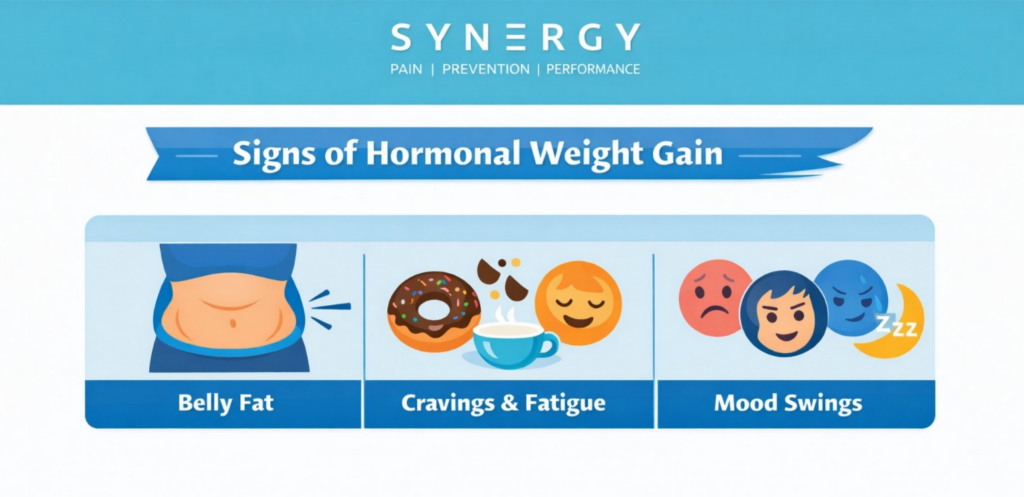
Weight related to hormonal disruption commonly accumulates around the midsection. If your arms and legs remain relatively unchanged but your waistline continues to expand, it is a strong indicator that hormones such as cortisol and insulin may be involved.
What People Commonly Report
Beyond body composition changes, many people experience:
- A general feeling of being “off” despite healthy habits
- Constant hunger or cravings for sugar and refined carbohydrates
- Persistent fatigue or low energy
- Mood swings, anxiety, or irritability
- Poor sleep or frequent nighttime waking
Can Hormones Cause Weight Gain?
Yes. Hormonal imbalances rarely occur in isolation. Multiple systems often overlap, compounding metabolic resistance and making weight loss increasingly difficult.
Understanding which hormones are involved is the first step toward restoring balance.
Common Hormonal Drivers of Weight Gain
Thyroid Imbalance
Your thyroid is the master control for your metabolism. In conditions like hypothyroidism, the thyroid gland is underactive. It sends out fewer hormones, effectively turning down your body’s internal thermostat. This slows your metabolism, causing weight gain, fatigue, and sensitivity to cold.
Cortisol and Chronic Stress
We often think of stress as just an emotion, but it is a physical event. When you are chronically stressed, your body pumps out cortisol. The link between cortisol and weight gain is significant; high cortisol increases appetite (specifically for sugar and carbs) and encourages the body to store fat in the abdominal area as a survival mechanism.
Insulin Resistance & Metabolic Changes
Insulin is the hormone that helps cells absorb energy from food. When you have insulin resistance, your cells stop responding to insulin’s knock at the door. Your body responds by making more insulin. Since insulin is a fat-storage hormone, high levels make it nearly impossible to burn fat, locking your body in storage mode.
Leptin Resistance
Leptin is the “satiety hormone” that tells your brain, “Stop eating, we have enough energy.” Leptin resistance means your brain may not ‘hear’ that you’re fully causing continued hunger after meals and making weight regulation harder despite good habits. You might feel ravenous even when your body has plenty of fuel.
Menopause/Perimenopause Shifts
For women, the transition into perimenopause and menopause involves a steep drop in estrogen. Menopause weight gain is incredibly common because estrogen helps regulate metabolism and body weight distribution. As levels drop, muscle mass decreases and fat storage shifts to the belly.
PCOS/Androgen Imbalance
Polycystic Ovary Syndrome (PCOS) is a common hormonal disorder involving elevated androgens (male hormones) and insulin resistance. This “double whammy” makes weight gain very easy and weight loss uniquely challenging for those with the condition.
What Causes Hormonal Imbalances in the First Place?
Not all imbalances are equal. Some are temporary and lifestyle-driven, while others stem from chronic conditions. Identifying the underlying trigger is the first step toward effective treatment and sustained weight loss..
Is It Hormonal? Clues to Watch For
If you are trying to determine if your struggles are hormonal, looking for patterns is helpful.
Metabolism-Related Symptom Checklist
- Sudden or steady weight gain despite a healthy lifestyle.
- Difficulty losing weight.
- Increased fat storage, especially around the belly.
- Persistent fatigue or low energy levels.
- Intense cravings for sugar or salt.
- Changes in your menstrual cycle.
- Mood swings, anxiety, or depression.
- Poor sleep quality or insomnia.
- Hair loss or thinning.
- Feeling unusually hot or cold.
How Doctors Evaluate Hormonal Weight Gain
You do not have to guess. Medical testing can provide clarity.
Why Tests and Your Story Both Matter
A lab result is just a number; your experience is the context. A “normal” range on a lab test is an average, not necessarily what is optimal for you. Your doctor needs to hear your story, your energy levels, your sleep quality, and how your body has changed to interpret those labs correctly.
When to See a PCP vs. Endocrinologist
Start with your Primary Care Physician (PCP). If your weight gain is sudden, unexplained, or comes with fatigue, mood shifts, or menstrual changes, ask your doctor about a hormone panel and specialist referral. An endocrinologist specializes in hormonal systems and is often better equipped to handle complex imbalances like thyroid disorders or PCOS.
Can You Reverse Hormonal Weight Gain Naturally?
You can support your body’s balance through intentional lifestyle changes. The goal isn’t just to lose weight, but to heal the system regulating it.
Proven Foundational Habits
These pillars support metabolic health:
- Sleep: Aim for 7-9 hours. Sleep deprivation spikes cortisol and hunger hormones.
- Protein: Prioritize protein at every meal to support muscle maintenance and satiety.
- Fiber: High-fiber foods support gut health, which plays a major role in hormone regulation and estrogen metabolism.
- Blood Sugar Control: Eating balanced meals prevents the insulin spikes that trigger fat storage.
When Lifestyle and Standard Treatments Are Not Enough
For some individuals, lifestyle changes and traditional hormone therapy do not fully resolve metabolic resistance. This often occurs when cells struggle to properly interpret hormonal signals related to fat metabolism and energy balance.
In these cases, physicians may evaluate advanced metabolic support strategies that focus on restoring healthy cellular communication rather than masking symptoms.
These medically supervised approaches are designed to help the body respond more effectively to internal metabolic signals.
When Medication or Hormone Therapy Is Appropriate
Hormone replacement therapy and medications can be valuable tools. However, they do not always address how efficiently cells respond to hormonal instructions.
For individuals who continue to struggle, providers may explore medically supervised metabolic optimization approaches that work upstream of traditional therapies and support cellular responsiveness.
Synergy’s Recovery Plan to Support Hormone Health and Weight Loss
Recovering from hormonal imbalance requires a gentle, strategic approach. Muscle is your metabolic engine, and as we age or experience hormonal shifts, we naturally lose muscle mass. You can help preserve it with regular strength training aiming for resistance exercises two to three times a week keeps your metabolism active without needing to become a bodybuilder. When considering cardio, keep in mind that high-intensity workouts can sometimes raise cortisol levels and work against your goals. Instead, prioritize gentle movement, like walking, which is excellent for lowering cortisol, and make time for rest and true downtime. Supporting a healthy circadian rhythm is also important: get morning sunlight to set your body’s natural clock and use dim lights in the evening to signal winding down. These combined strategies help reset your hormone balance and support sustainable weight loss.
Taking Action: Preparing for Your Next Doctor Visit
To make the most of your appointment, go prepared. Empowerment starts with information.
What to Track
Before your visit, start tracking your symptoms. Keep a simple log of:
- A timeline of when your weight gain and other symptoms began.
- Details about your sleep patterns, energy levels, and moods.
- Information about your menstrual cycle (if applicable).
- Any previous lab results you may have.
When to Escalate Care
If you feel your concerns are not being addressed or your symptoms are worsening, don’t hesitate to seek a second opinion or ask for a referral to a specialist. You are your own best advocate.
FAQs: Your Hormonal Weight Gain
Can You Rebalance Hormones Naturally?
Yes. For many people, addressing diet (specifically the best diet for hormonal weight gain usually focuses on anti-inflammatory whole foods), stress, and sleep can restore balance without medication. However, this depends on the severity and type of imbalance.
What Are the Best Blood Tests to Detect Hormonal Imbalance?
- TSH, Free T3, Free T4 (thyroid function)
- Fasting insulin and glucose (metabolic health)
- Cortisol (stress hormone)
- Estrogen, progesterone, testosterone (sex hormones)
How Long Does It Take to See Weight Changes from Hormone Treatment?
Patience is essential. Unlike crash diets, hormonal healing takes time. You may feel better (more energy, better sleep) within weeks, but physical weight changes often take 3 to 6 months of consistency as your metabolic machinery repairs itself.
What If Hormone Therapy Alone Does Not Resolve Weight Gain?
In some cases, restoring hormone levels does not fully correct metabolic resistance. Providers may consider therapies that support cellular communication support and improve how the body responds to hormonal signals under medical supervision.