Amino acid chains work by linking individual amino acids into specific sequences that form proteins. These proteins support structure, movement, energy regulation, and natural repair processes inside the human body. In simple terms, amino acid chains allow the body to build, maintain, and adapt its internal structures in response to everyday physical demands.
Many people feel confused about how muscles recover, why energy drops after activity, or how the body heals at such a small level. These questions are common and valid. At the core of all these processes is basic human biology. Amino acid chains are not something extra or artificial. They are a natural part of how cells function every day, quietly supporting movement, balance, and internal stability without us noticing.
Why Amino Acids Matter for Human Movement and Recovery
Human movement relies on coordination between muscle tissue, nerve signals, and connective structures. Amino acids contribute to the proteins that allow muscles to contract, relax, and respond to physical demand. These processes operate continuously during everyday movement and activity.
Recovery is a natural biological response that follows physical stress. The body redirects internal resources to maintain balance and support cellular stability. Amino acid based signaling helps guide this process by contributing to tissue renewal and structural support over time.
What Are Amino Acids? A Simple Biological Explanation
Amino acids are organic compounds made of carbon, hydrogen, oxygen, nitrogen, and a variable side chain that defines their behavior. Their chemical structure allows them to interact precisely within cells and participate in controlled biological processes. These molecules serve as the foundational units used by the body to create complex biological structures.
Essential Amino Acids and Dietary Protein
Essential amino acids are those that the human body cannot produce on its own. These amino acids must be obtained through dietary protein sources such as plant or animal-based foods. Their availability directly affects how efficiently the body can maintain internal protein balance.
Once consumed, dietary protein is broken down into individual amino acids. These amino acids enter circulation and become available for controlled biological use. The body does not store essential amino acids long-term, making consistent intake biologically important.
Nonessential Amino Acids and Internal Production
Nonessential amino acids are synthesized internally through metabolic pathways. The body creates them using nitrogen-containing compounds and carbon skeletons derived from other nutrients. This process allows flexibility when dietary conditions change.
Internal amino acid production helps maintain stability during periods of limited intake. These amino acids support ongoing molecular processes by ensuring that basic protein-building materials remain available. Their regulation is tightly controlled to prevent imbalance within cells.
What Are Amino Acid Chains, and Why Does the Body Use Them?
Amino acid chains form when individual amino acids connect in a specific order. This order is not random. The sequence determines how the chain behaves inside the body.
The body relies on amino acid chains to carry out complex biological instructions. Short chains can act as signals, while longer chains become proteins. This system helps cells create organized and functional biological structures.
How Amino Acids Link Together Through Peptide Bonds
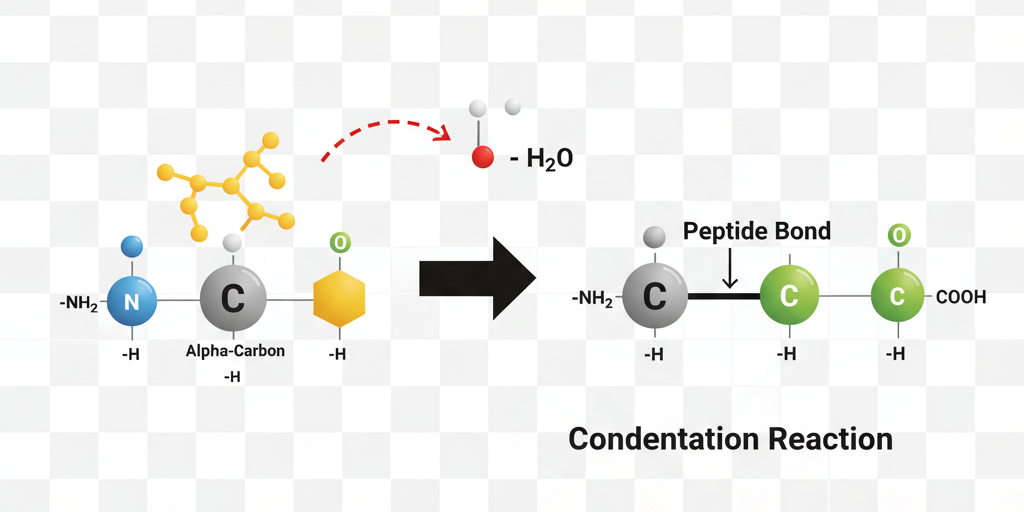
A peptide bond is a chemical connection that forms between two amino acids during a controlled molecular reaction. This bond occurs when the amino group of one amino acid reacts with the carboxyl group of another. A small water molecule is released in the process, making the bond stable.
This bonding mechanism allows amino acids to join in a precise, stepwise manner. Each peptide bond locks the molecules together in a fixed orientation. Over time, repeated bonding creates longer molecular structures that cells can recognize and process accurately.
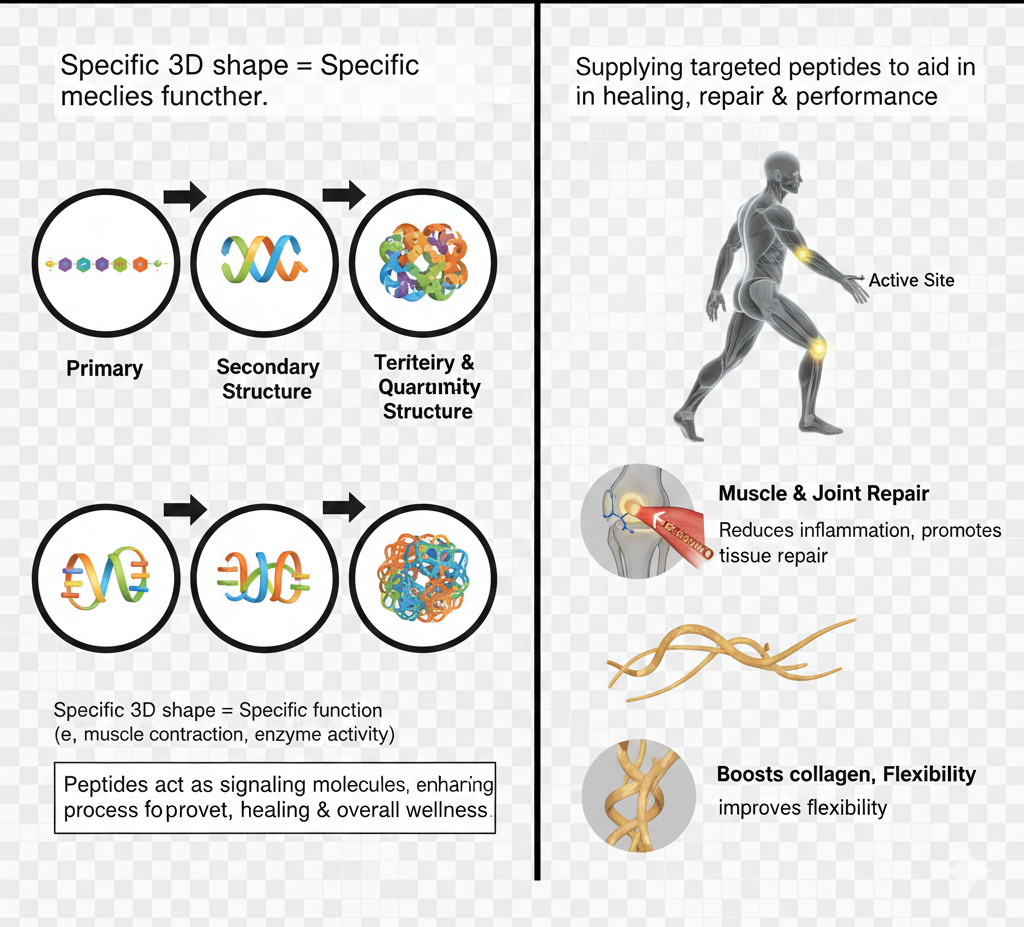
The Four Levels of Protein Structure Explained Simply
Protein structure describes how a biological molecule organizes itself after formation. This organization follows a layered system that determines stability, interaction, and biological usefulness. Each level builds on the previous one to create structures capable of performing specific roles inside living systems.
Primary Protein Structure and Amino Acid Sequence
Primary structure refers to the exact linear order of molecular units within a chain. This order acts as encoded information that guides how the structure will behave later. Even a single change in this sequence can alter biological outcomes.
Secondary and Tertiary Protein Folding
Secondary structure forms when parts of a molecule bend into repeating shapes, while tertiary structure develops as the entire molecule folds into a compact three-dimensional form. These folding stages allow internal interactions that prepare the structure for biological activity.
Quaternary Structure and Functional Proteins
Quaternary structure occurs when multiple folded units assemble into a single working complex. Each unit contributes to a shared role while maintaining its own integrity. This level enables higher efficiency and coordinated biological function.

From Dietary Protein to Amino Acids in the Bloodstream
Dietary protein enters the body through food and undergoes a process called proteolysis. In this process, complex protein material is reduced into smaller molecular units that the body can manage. This transformation prepares the material for absorption rather than immediate biological use.
Once broken down, individual amino acids pass through the intestinal lining via specialized transport systems. These molecules then move into portal circulation, where they are distributed to different tissues. This controlled delivery ensures amino acids are available where biological demand exists.
Understanding how amino acids enter circulation helps explain why nutritional factors that influence amino acid availability play a role in maintaining normal biological function
How Cells Build Amino Acid Chains Through Protein Synthesis
Protein synthesis is the cellular process that converts genetic instructions into organized biological material. This process follows a fixed sequence of steps that ensures accuracy and consistency. Cells use internal control systems to translate stored genetic information into usable molecular structures.
Transcription and Genetic Instructions
Transcription begins inside the nucleus, where genetic information stored in DNA is copied into messenger RNA. This RNA strand carries coded instructions that specify molecular order and timing. The accuracy of this step is critical, as it determines how information will be interpreted later.
Translation and Ribosome Assembly
Translation occurs when cellular machinery reads messenger RNA and assembles molecular components accordingly. Ribosomes act as coordination centers, ensuring each unit is placed in the correct position. This step finalizes the construction process and prepares the structure for functional use.
How Amino Acid Chains Support Muscle Repair and Tissue Recovery
During physical stress, muscle fibers experience microscopic structural disruption. The body responds by activating localized repair pathways that depend on molecular rebuilding. Amino acid chains contribute to this process by supplying material needed for restoring internal muscle architecture.
Inside muscle tissue, specialized cells coordinate remodeling by reinforcing myofibrils and stabilizing connective components. This controlled rebuilding helps maintain muscle integrity and supports adaptation over time. The process is gradual, regulated, and part of normal biological recovery.
Amino Acids in Sports Medicine and Recovery Science
Sports medicine studies how the body responds to mechanical load, movement patterns, and repeated physical stress. Within this field, amino acid chains are examined as part of musculoskeletal biology and cellular adaptation that supports tissue stability during ongoing use.
Recovery science focuses on how the body restores functional balance after exertion. Amino acid chains are observed for their role in maintaining molecular stability over time. These biological concepts studied within sports medicine help explain how the body manages repeated physical demand without focusing on treatment or intervention.

Protein Turnover, Adaptation, and Recovery Cycles
Protein turnover describes the continuous cycle of molecular breakdown and renewal inside living tissue. Instead of remaining static, biological structures are constantly evaluated and adjusted based on internal conditions. This dynamic process allows the body to stay responsive rather than rigid.
Adaptation occurs when turnover rates shift in response to physical demand or environmental change. Older molecular components are replaced with newly formed ones that better match current needs. These cycles help maintain efficiency, balance, and long-term functional stability.
What Happens When Amino Acid Chains Are Disrupted
Disruption occurs when molecular assembly or stability is altered beyond normal regulation. This may result from insufficient availability, structural errors, or imprecise cellular control mechanisms. When this happens, biological efficiency can decline.
At the cellular level, disrupted chains may fail to maintain form or coordination. This can affect how tissues organize and respond internally. The body often compensates by adjusting internal pathways, but prolonged disruption may reduce adaptability over time.

Aging, Training Stress, and Amino Acid Utilization
As the body ages, cellular efficiency gradually changes, affecting how molecular resources are processed and allocated. Regulatory pathways become less responsive, and utilization patterns shift over time. These changes influence how biological systems manage internal resources under normal conditions.
Training stress introduces additional regulatory demand by increasing cellular workload. The body adapts by modifying how internal materials are allocated and prioritized. Efficient cellular efficiency and regulation becomes increasingly important for maintaining long-term balance.
Why Amino Acid Science Matters for Long-Term Movement Health
Long-term movement health depends on the body’s ability to preserve internal organization and responsiveness. Molecular science helps explain how biological systems maintain continuity across years of physical activity. This understanding shifts focus from short-term performance to sustainable movement capacity.
Key biological insights from amino acid science include:
- How internal structures remain stable under repeated mechanical demand
- How biological systems adapt without becoming rigid or inefficient
- How molecular regulation supports long-term functional balance
Key Takeaways on Amino Acid Chains in the Human Body
Amino acid chains operate as part of a highly regulated internal system that allows the body to remain organized, responsive, and adaptable. Their behavior reflects biological precision rather than isolated function. Understanding this system helps explain how complex living structures remain stable under constant change.
Core concepts to remember include:
- Molecular order is essential for biological consistency
- Internal regulation supports adaptability, not randomness
- Structural organization enables long-term functional balance